Key Takeaways
- The tactics that work at five years old will actively backfire at fifteen
- Consistent parental involvement at every age is the single biggest predictor of lifelong dental habits
- Teenagers respond to autonomy and real consequences, not games and reward charts
- Orthodontic treatment like Invisalign only works well when oral hygiene is already solid
Why the Approach to Encouraging Tooth Brushing Has to Change as Kids Grow
Brushing teeth is one of those habits that parents introduce early, celebrate when it sticks, and then quietly assume is handled. The problem is that the approach that works beautifully at age five stops working around age nine, and the approach that works at nine will feel condescending and counterproductive to a fifteen-year-old.
What doesn’t change is the need to stay engaged. Research consistently shows that children whose parents remain involved in oral hygiene habits across all age groups, not just in the early years, develop measurably better dental health outcomes into adulthood. Showing up matters at every stage. How you show up has to evolve.
Here is what actually works, broken down by age. For pediatric dental cleanings that fill the gaps in at-home dental hygiene, call the Dental Care Group Kids at our Pembroke Pines dental clinic at (954) 430-2300 or our Aventura dental clinic at (305) 935-1613.
Ages 2 to 6: Make It Routine Before They Have an Opinion About It
The early years are the best window. Toddlers aren’t self-conscious; they want your approval, and they haven’t developed resistance yet.
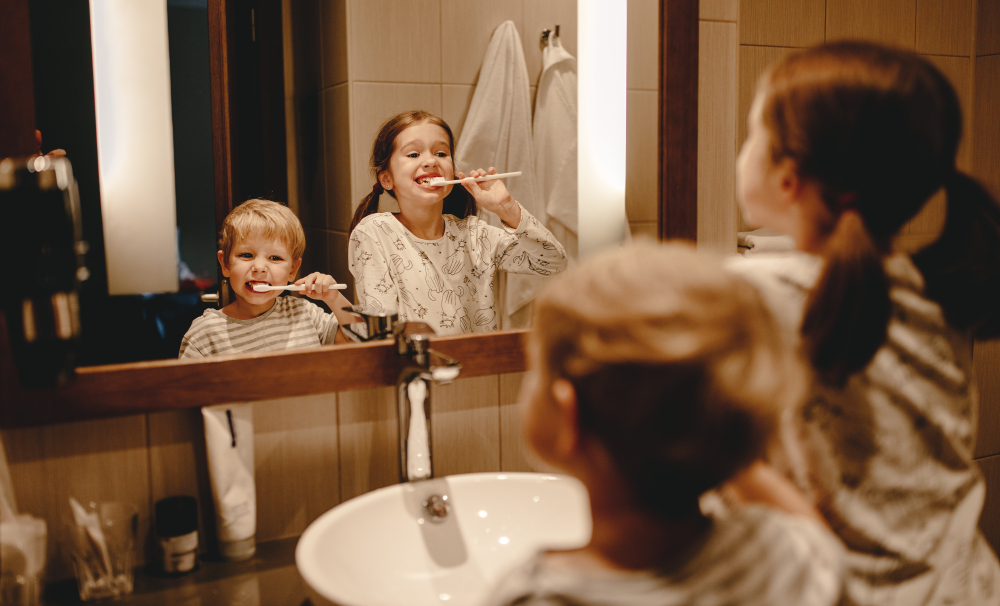
 Brush together at the same time every day so it becomes part of the rhythm, not a separate chore
- Use a two-minute timer or song to make the duration feel like an event
- Let them pick their toothbrush and toothpaste flavor so they feel ownership
- Brush their teeth for them until age six to eight, even after they can do it themselves — fine motor control isn’t there yet
 Brush together at the same time every day so it becomes part of the rhythm, not a separate chore
Skip nights, and you’re not just skipping brushing. You’re skipping the repetition that makes the habit automatic.
Ages 7 to 11: Stay in the Loop Even When They Push Back
Kids this age can brush independently, which makes it easy to assume they’re doing it correctly. Most aren’t. Children at this age brush for less than a minute on average, rather than the ADA-recommended two minutes, and consistently miss the same spots: back molars, the gumline, and the inside surfaces of the lower front teeth.
- Use disclosing tablets once a month to show them exactly where they’re missing
- Shift from supervisor to coach: “Let me see how you’re doing!” instead of “Did you brush?”
- Connect hygiene to things they care about: confidence, not getting fillings, and not having bad breath
This is also the window where sealants and fluoride treatments make the most impact. If your child is due for a checkup, the team at Dental Care Group Kids can give you a clear picture of where their hygiene habits stand. Call our Aventura dental office at (305) 935-1613 or Pembroke Pines at (954) 430-2300.
Ages 12 to 15: Drop the Games and Talk to Them Straight
Adolescents at this age are developing their identity and sense of autonomy. They resist being told what to do, and anything that feels like they’re being treated like a child will be tuned out immediately.
 What backfires:
- Reward charts
- Commands phrased as reminders
- Lectures
What works:
- One short, factual statement and drop it: “Mouthwash masks bad breath for an hour. The bacteria are still there.”
- Ask instead of tell: “Do you want a reminder or do you want to handle it?” Most will choose to handle it themselves
- Let the dentist deliver the hard news directly — it lands differently coming from a clinician than a parent
Ages 16 to 18: Make the Aesthetic Case and Mean It
 Older teens are aware of how they look and how they’re perceived. Work with that, not around it.
- Inconsistent brushing causes surface staining that whitening can’t fully reverse
- Cavities create bacterial environments that cause real, persistent odor
- Inflamed gums look puffy and receded, which visibly ages a smile
If your teenager is interested in Invisalign, there’s a direct and honest case to make. Trays fit tightly against the teeth for 20 to 22 hours a day. When teeth aren’t cleaned before trays go back in, bacteria get sealed against the enamel under the tray. The result is accelerated decay and staining on the exact surfaces orthodontic treatment is supposed to improve.
| With Consistent Brushing | Without Consistent Brushing |
|---|---|
| Trays stay clear longer | Trays yellow and develop odor faster |
| Enamel protected during treatment | Enamel vulnerable to accelerated decay |
| Smile improves as intended | White-spot lesions can appear post-treatment |
Dental Care Group Kids offers orthodontics alongside pediatric care with the help of our in-office orthodontist, Dr. Scott Spencer, and our founder and Diamond Invisalign Provider, Dr. Rick Mars.
The Habit You Build Together Lasts a Lifetime
The parent who brushes alongside their toddler, checks in with their ten-year-old, has a straight conversation with their thirteen-year-old, and keeps the bathroom stocked for their seventeen-year-old is doing the same thing at every stage: showing that this matters.
Every child is different, and you know yours better than any guide does. The strategies above are starting points, not rules. If a reward chart works for your twelve-year-old or your seven-year-old responds better to a straight talk, trust that. What matters is finding the method that encourages them to brush, and you’ll discover what that is most easily by being part of their routine.
At Dental Care Group Kids, Dr. Dalia Rosenfeld and our team have been supporting South Florida families for over 25 years across our Aventura and Pembroke Pines dental practice locations, with care available in English and Spanish. Call (305) 935-1613 (Aventura) or (954) 430-2300 (Pembroke Pines) to schedule a consultation.