
Safe, Gentle Tooth Extractions for Children Near You
 Learning that your child needs a tooth extraction can feel stressful. In many cases, it’s a straightforward procedure that quickly relieves pain and protects their long-term oral health. At Dental Care Group Kids, our pediatric dentists in Aventura and Pembroke Pines are experienced in making tooth extractions as calm, comfortable, and stress-free as possible for children of all ages.
Whether your child needs a simple baby tooth removal or a more complex surgical extraction, our team is here to guide your family through every step with compassion, clear communication, and expert pediatric care.
To schedule a consultation at our Aventura dental office, call (305) 935-1613. For our Pembroke Pines dental office, call (954) 430-2300.
Dental Care Group Kids, Your All-in-One Pediatric Dental Practice
When you choose Dental Care Group Kids, you are choosing the convenience of comprehensive, top-tier dental care all under one roof. Finding a specialized provider for every stage of your child’s dental development can be exhausting, which is why our state-of-the-art facilities bring everything from advanced orthodontics to surgical procedures like safe tooth extractions together in a single practice. This all-in-one approach not only saves busy parents time but ensures your child’s lifelong oral health is monitored by a cohesive team that already knows and understands their unique dental history.
When Does a Child Need a Tooth Extraction?
Tooth extractions in children are sometimes necessary for a variety of reasons. Our pediatric dentists will always explore every option to preserve a natural tooth before recommending removal, but when extraction is the right choice, acting promptly protects your child’s smile and development.
Common reasons a child may need a tooth extraction include:
- Baby teeth that won’t fall out on their own: Sometimes a primary tooth has unusually long or misshapen roots that prevent it from loosening naturally. If it isn’t removed, it can block the permanent tooth from erupting underneath it.
- Severe decay or infection: When a tooth is so badly decayed that it cannot be saved—even with a pulpotomy or dental crown—removal may be necessary to prevent the infection from spreading.
- Orthodontic treatment: Overcrowding sometimes requires the removal of one or more teeth to create the space needed for proper alignment.
- Trauma or injury: A tooth that has been severely fractured or damaged beyond repair may need to be extracted.
- Impacted or problematic wisdom teeth: In older teens, wisdom teeth that are impacted, poorly positioned, or causing crowding may require surgical removal.
Why Preserving Space After Extraction Matters
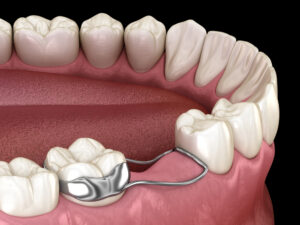 Even though baby teeth are temporary, losing one too early can have lasting consequences. Your child’s primary teeth act as natural space holders, guiding permanent teeth into the correct positions as they develop. When a baby tooth is lost prematurely, neighboring teeth can drift into the empty space, blocking or crowding the incoming permanent tooth.
To prevent this, your child’s dentist may recommend a space maintainer after an extraction. This small dental appliance holds the gap open so the permanent tooth has room to erupt properly, reducing the likelihood of orthodontic problems down the road.
Types of Pediatric Tooth Extractions
Tooth extractions fall into two categories, and the type your child needs will depend on the tooth’s position, condition, and root structure.
Simple Extraction
A simple extraction is performed on a tooth that is fully visible in the mouth and accessible without surgical intervention. It’s typically a quick, straightforward procedure completed under local anesthesia. Simple extractions are common for baby teeth that are retained past their natural timeline or for teeth that are badly decayed but still intact above the gumline.
Surgical Extraction
A surgical extraction is necessary when a tooth is impacted, broken below the gumline, has unusually curved or long roots, or cannot be fully accessed without an incision. Surgical extractions are more involved and often performed with sedation to keep your child relaxed and comfortable throughout.
The Tooth Extraction Procedure at Dental Care Group Kids
We believe that knowing what to expect can go a long way toward reducing anxiety — for children and parents alike. Here’s what the extraction process typically looks like at our Aventura and Pembroke Pines offices:
1. Examination and X-Rays
Your child’s dentist will thoroughly examine the affected tooth and take X-rays to assess the root structure, the position of any developing permanent teeth, and the best approach for removal.
2. Anesthesia and Sedation
Local anesthesia is applied to numb the area completely so your child won’t feel pain during the procedure. For children who are anxious or undergoing a more complex surgical extraction, additional sedation options are available to help them feel calm and relaxed.
3. The Extraction
For a simple extraction, the dentist gently loosens the tooth using specialized instruments to widen the socket and carefully separate the tooth from the surrounding ligament, then removes it. For surgical extractions, a small incision may be made in the gum tissue to access the tooth. While your child may feel some pressure during this step, they should not feel pain.
4. Protecting the Extraction Site
Once the tooth is removed, the socket is cleaned, and a gauze pad is placed to help a blood clot form, which is essential for proper healing. In some cases, dissolving sutures may be placed to close the site.
5. Space Maintenance Planning
If a baby tooth has been removed ahead of schedule, your child’s dentist will discuss whether a space maintainer is appropriate to preserve room for the incoming permanent tooth.
Sedation Options for Comfortable Pediatric Extractions
At Dental Care Group Kids, your child’s comfort and sense of safety are our highest priorities. Common child-friendly sedation options include:
- Local Anesthesia: Numbs the area around the tooth so your child remains fully awake but completely pain-free during the procedure.
- Nitrous Oxide (Laughing Gas): A safe, mild sedation option commonly used in pediatric dentistry. Nitrous oxide helps anxious children relax without putting them to sleep, and wears off quickly so they can return to normal activity shortly after the appointment.
- Oral Sedation: For children with more significant dental anxiety, oral sedation medication taken before the appointment can provide a deeper level of relaxation.
We offer local anesthesia and oral sedation options to ensure a positive experience, but other child-friendly sedation options may not be available. Your child’s dentist will discuss the most appropriate sedation option based on your child’s age, anxiety level, and the complexity of the procedure.
What to Expect During Recovery
Most children recover from a tooth extraction relatively quickly, especially with proper aftercare. Here’s a general timeline of what to expect:
First 24 Hours: Have your child rest and avoid vigorous activity. Keep the gauze pad in place as directed and apply a cold compress to the cheek to help manage swelling. Avoid rinsing, spitting forcefully, or using straws, as these actions can dislodge the blood clot forming in the socket.
Days Two to Three: Some swelling and mild soreness are normal and typically peak around this time before beginning to subside. Over-the-counter children’s pain relievers can help manage discomfort as directed.
One Week: Most children are back to their normal routines within a few days to a week. The extraction site will continue healing beneath the surface over the following weeks.
Post-Extraction Care Tips for Parents
 Helping your child follow these guidelines after their extraction will support smooth, complication-free healing:
- Give soft foods like yogurt, applesauce, mashed potatoes, and smoothies for the first few days. Avoid hard, crunchy, hot, or sticky foods.
- Do not use straws or allow forceful spitting for at least 24 hours.
- Keep up with gentle brushing, avoiding the extraction site directly.
- Watch for warning signs of complications, including increasing pain, swelling that worsens after the first few days, fever, or discharge from the extraction site.
If your child shows any signs of infection or you have concerns about their healing, don’t hesitate to contact us. Call our Aventura office at (305) 935-1613 or our Pembroke Pines office at (954) 430-2300.